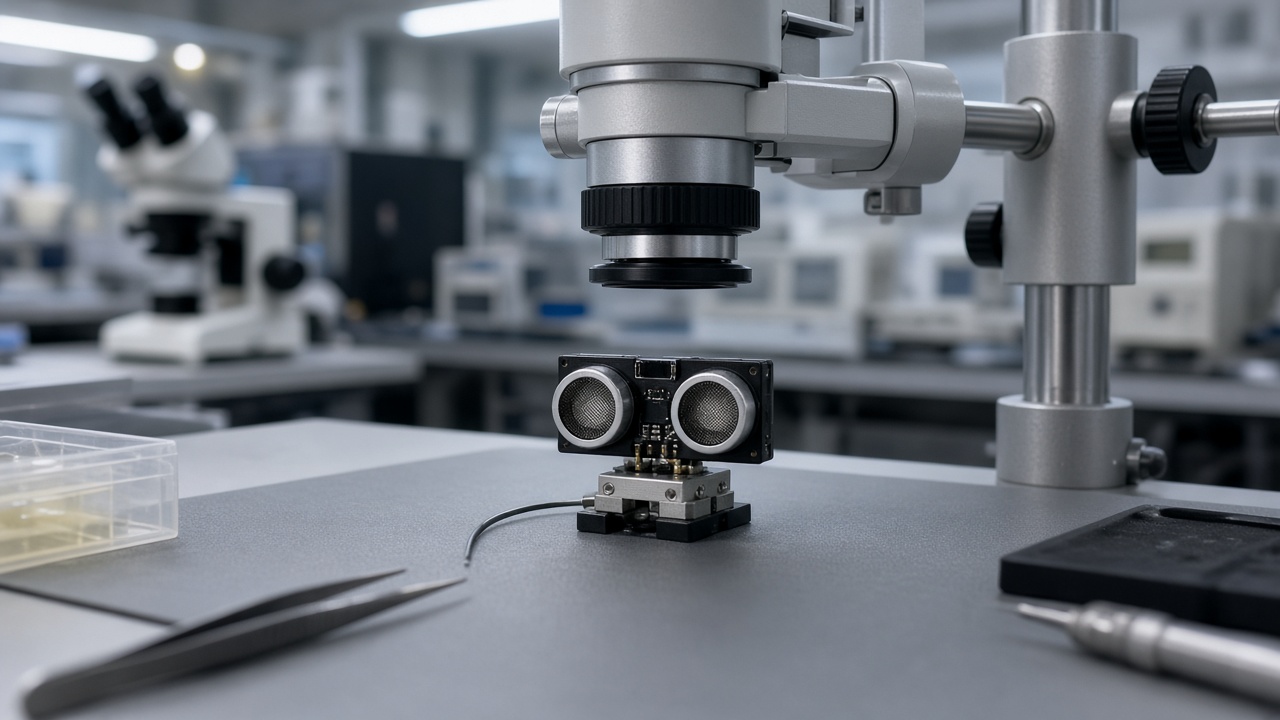
Researchers at Pohang University of Science and Technology said they can authenticate fingerprints using ultrasonic metasurfaces without saving biometric images to a database, a design aimed at reducing breach risk in mobile payments and building access.
Professor Junsuk Rho's team published the work in Nature Sensors, reporting 97.92 percent accuracy across 192 validation samples from four volunteers in bench tests. Numerical simulations on an international fingerprint archive reached 99.75 percent for a single enrolled user when metasurface complexity increased.
How it works
Conventional scanners capture high-resolution ridge images that hackers can exfiltrate. The POSTECH approach encodes fingerprint features into how ultrasonic waves scatter across a engineered metasurface plate. Matching compares live scatter patterns to a mathematical template rather than to a stored photograph.
Because no picture leaves the sensor, attackers who compromise a server obtain transforms that are harder to replay on other devices. The trade-off is hardware cost and calibration: the current prototype operates near 40 kilohertz, below industrial fingerprint sensors that run in the megahertz range.
Path to products
Rho's group said miniaturization and multi-user enrollment are the next hurdles. Finance and healthcare regulators in Korea have pressed vendors to adopt on-device biometrics after card-app leaks, but they also demand false-accept rates low enough for unattended kiosks.
Commercial partners would need to integrate metasurfaces into phone bezels or door readers without thickening chassis. POSTECH noted support from the Ministry of Science and ICT and POSCO's N.EX.T impact program, signaling interest from industrial backers if lab metrics hold in field pilots.
Why it matters locally
South Korea's digital-ID push depends on public trust after successive data incidents. A fingerprint mode that never stores pictures could ease privacy impact assessments for banks rolling out passwordless login. It will not replace one-time codes entirely—templates can still be stolen if software is sloppy—but it removes a high-value image file from the attack surface.
Expect at least a year of pilot contracts before consumers see the tech in Galaxy or domestic fintech devices. Still, the paper gives regulators a concrete example of security-by-design as they draft AI and biometric rules for 2027.
Competing approaches—on-device neural templates, vein readers, and face ID—will not disappear. Metasurfaces add another option for institutions that must delete images under Korea's Personal Information Protection Act after fixed retention periods.
Manufacturers in Suwon and Pangyo smartphone supply chains will watch yield rates as metasurfaces move from gallium labs to punch presses. Any crack in the plate detunes scatter patterns, so quality control must be tighter than for conventional CMOS sensors.
If pilots succeed, expect integration first in corporate turnstiles and hospital pharmacies where users enroll once on site. Consumer phones will follow only after multi-user enrollment and spoof-testing against printed scatter maps are solved.