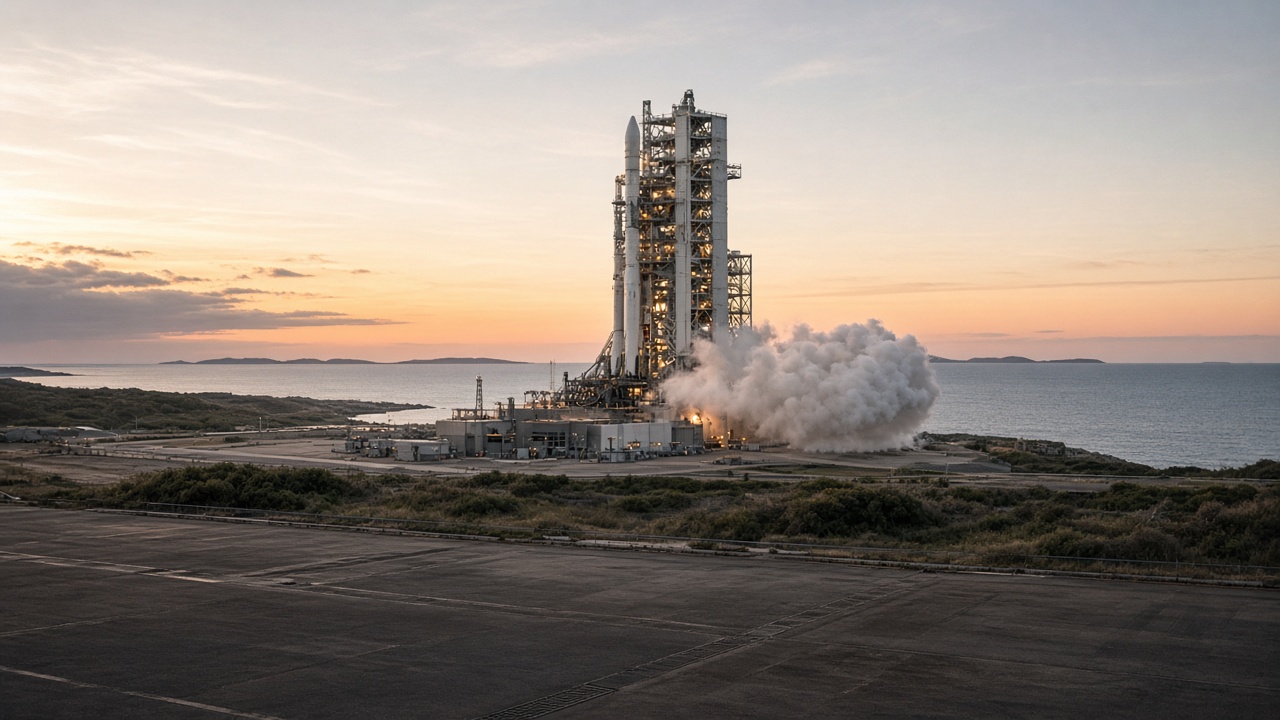
The Japan Aerospace Exploration Agency said its H3 Launch Vehicle Flight 10 successfully placed the Martian Moons eXploration spacecraft on a trajectory toward Mars after a 4:41 a.m. liftoff Tuesday from Tanegashima Space Center in Kagoshima Prefecture.
Mission milestones ahead
MMX is scheduled to arrive at Mars in August 2027, enter a quasi-satellite orbit around Phobos, and attempt two touchdowns to collect regolith for return to Earth in the early 2030s. A French-German rover aboard could deploy to the surface late in the decade.
The flight was the tenth H3 launch and a redemption arc for a rocket that suffered a failed debut before stabilizing into Japan's primary heavy-lift vehicle developed with Mitsubishi Heavy Industries.
Science stakes
Researchers hope Phobos samples will clarify whether the Martian moons are captured asteroids or debris from a giant impact, a question with implications for solar-system formation models taught in Japanese classrooms and universities.
Domestic suppliers provided avionics, thermal blankets, and ground tracking stations across Kyushu and Okinawa that monitored the ascent over the Pacific.
Public viewing
JAXA streamed the launch with a reserved backup window through November 9 in case weather scrubbed early attempts. Local hotels on Tanegashima reported full bookings from space tourists and school groups bused from mainland Kagoshima.
Science ministers said a successful cruise phase will support budget debates for follow-on planetary missions, including continued participation in international Mars sample efforts.
Ground stations in Australia and Chile will track MMX during early course corrections, sharing telemetry under agreements JAXA signed after the Artemis accords discussions. Those international links reduce the risk of losing the spacecraft if a single Pacific station goes offline during a storm.
Mitsubishi Heavy Industries engineers celebrated on the control room floor but noted that commercial launch orders still depend on H3 maintaining this streak. Satellite operators watch insurance premiums, which fell slightly after the last two successful flights.
Classrooms nationwide scheduled special broadcasts so students could compare MMX with earlier Hayabusa missions, tying the launch to curriculum units on sample-return science and engineering ethics.
Diet analysts will ask whether MMX crowds Earth-observation budgets needed for disasters, though officials say launch costs were booked earlier. Policy staff framed the mission as insurance for Japan's seat at planetary-science tables.