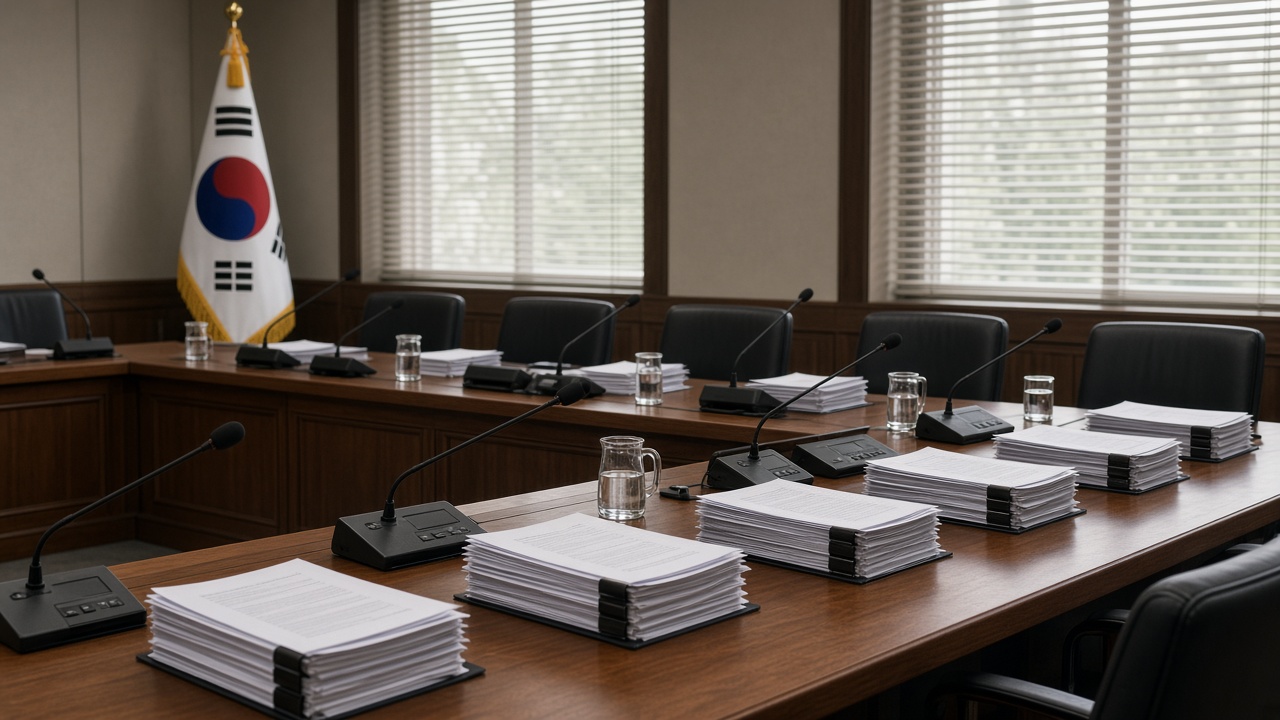
We should not ask the National Assembly to vote on sweeping trade bills while the customs annex that determines tariff phase-outs remains locked in interagency drafts—the same texts the Federation of Korean Industries has requested daily since President Lee Jae Myung pledged farmer safeguards on CPTPP entry.
Transparency is the precondition
Lawmakers cannot weigh claims about rice quotas or auto parts origin rules without line-by-line schedules. Publishing a summary slide while withholding annex tables treats the legislature like a rubber stamp, and it repeats the mistake that poisoned the 2015 FTA debate when leaked chapters surfaced only after protests.
Market euphoria is not a substitute
A rising Kospi does not answer how customs brokers will code preferential rates on day one. Exporters facing U.S. and EU rules of origin need lead time to retool documentation, and small manufacturers cannot hire compliance staff overnight because equities rallied on foreign buying.
What the government should do
The Ministry of Trade, Industry and Energy should release the full customs annex to a bipartisan briefing room, allow on-the-record questions, and slip the vote until at least one public hearing per affected sector—agriculture, autos, chemicals—has concluded. If security clauses must stay classified, redact only those paragraphs, not the tariff lines that set prices in grocery aisles.
Opposition's role
People Power Party boycotts over witness lists in other bills should not become an excuse for the ruling bloc to rush trade votes on a thin agenda. Both sides gain when the record shows who read the annex before casting votes.
Farmers deserve numbers, not slogans
Rice growers in Jeolla provinces have heard repeated assurances that tariff-rate quotas will shield domestic prices, yet without annex tables they cannot model income under competing import scenarios. Cooperative leaders said they would accept painful adjustments if the math is public, but they refuse to endorse blank checks that leave adjustment payments to future decrees.
Corporate compliance clocks
Automakers exporting to CPTPP members already track rules-of-origin paperwork for U.S. and EU markets; adding another overlapping schedule without lead time invites customs fines at Busan and Pyeongtaek gates. Publishing annex language in October still leaves only weeks before January implementation rumors, which is why we argue for a formal delay rather than a rushed voice vote.
A vote delayed is not a vote denied
Delaying plenary votes until annexes circulate would still let Korea meet partner timetables if committees use the intervening weeks for amendment markup rather than recess. The cost of transparency is measured in calendar days, not lost deals.
Local governments that host export processing zones also have a stake: they need time to train staff on new tariff lines before trucks hit gates. Rushing a vote without annex text shifts compliance risk onto provincial budgets already stretched by disaster recovery spending.
Parliamentary staff have the bandwidth to digest annex tables if ministries stop treating commercial chapters as state secrets. We have paid negotiators to produce those lines; withholding them now insults the exporters who must live with the results.
When the Assembly eventually votes, the record should show which members attended briefings and which cast ballots blind. That standard protects both farmers fearing import surges and factory managers betting on preferential rates.