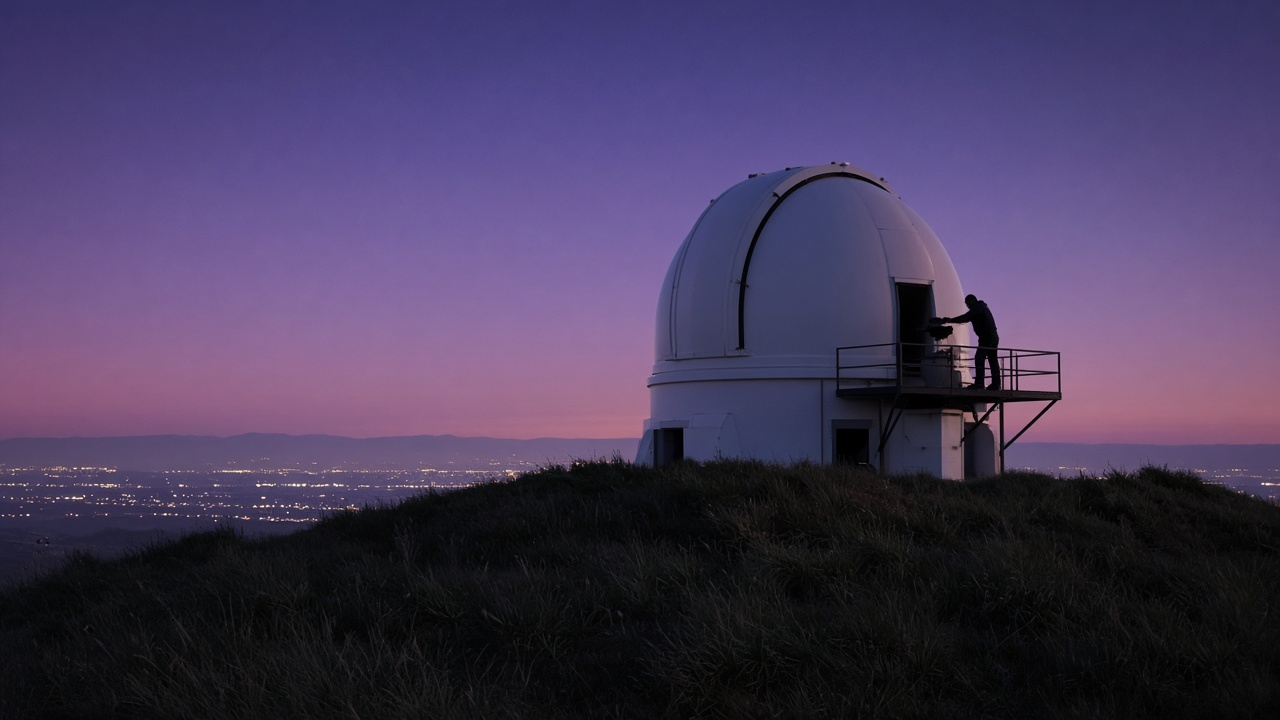
Radar arrays operated by the Korea Astronomy and Space Science Institute detected a thicker Leonid debris filament heading toward Earth's orbit, a signature that could lift visible meteor counts over South Korea around the shower's mid-November peak if weather cooperates.
What the instruments saw
Engineers at the Daejeon Space Weather Center logged a 30 percent jump in millimeter-sized particles compared with last October's baseline, using transmitters that bounce signals off ionized trails. The cluster aligns with a dust band ejected from Comet Tempel-Tuttle in the 1730s, according to NASA's Meteoroid Environment Office models shared with KASI.
Viewing prospects
Prime hours for Seoul viewers will fall between 3 a.m. and 5 a.m. on November 17, when the radiant climbs above light-pollution haze. Rural sites in Gangwon and Jeolla provinces could see 15 to 20 meteors per hour under clear skies, double the suburban rate.
Public programs
KASI will stream a multi-camera feed from its Bohyunsan Optical Astronomy Observatory and host a bilingual Q&A for school groups on November 16. City governments in Suwon and Gwangju said they would dim decorative lighting along river parks for one night if cloud-cover forecasts improve within 48 hours of the peak.
Research payoff
Particle counts help satellite operators plan thruster burns before communications arrays ride through the stream. KASI plans to publish open data within a week so university teams can compare optical and radar tracks without traveling to the site.
Equipment upgrades this season
KASI installed a new phased-array radar near Jeju last month, improving detection of faint trails over the East China Sea. Technicians will cross-calibrate optical cameras on Mount Bohyun with the radar feed so fireball reports from fishermen can be verified within minutes.
Safety notes for photographers
The institute warned drone operators not to fly near observatory airspace during peak nights, citing collision risks with research balloons. Smartphone astrophotography guides published in Korean and English recommend manual exposure settings to avoid washed-out streaks when city glare is present.
Classroom kits
KASI shipped 200 meteor-tracking kits to rural middle schools, each with red-lens flashlights and star charts tuned for Leonid radiants. Teachers can upload student counts to a citizen-science portal that feeds back into KASI orbit models, improving predictions for satellite operators.
Hoteliers along the east coast marketed meteor-viewing packages with late checkout options, betting on urbanites willing to drive two hours for darker skies. KASI cautioned that moon phase glare on November 16 could cut visible rates by a third even if the dust stream performs as modeled.
Amateur astronomy clubs in Daegu and Daejeon plan joint watch parties on rooftops with municipal permission, sharing telescopes donated after a 2023 crowdfunding drive. KASI volunteers will attend two events to calibrate citizen counts against radar returns.