Far Eastern Memorial Hospital in New Taipei began a controlled trial Monday that routes Hokkien spoken at emergency registration through a locally hosted Whisper speech model, letting triage nurses drop transcribed chief complaints into the electronic record instead of typing Mandarin summaries from memory.
How the queue works
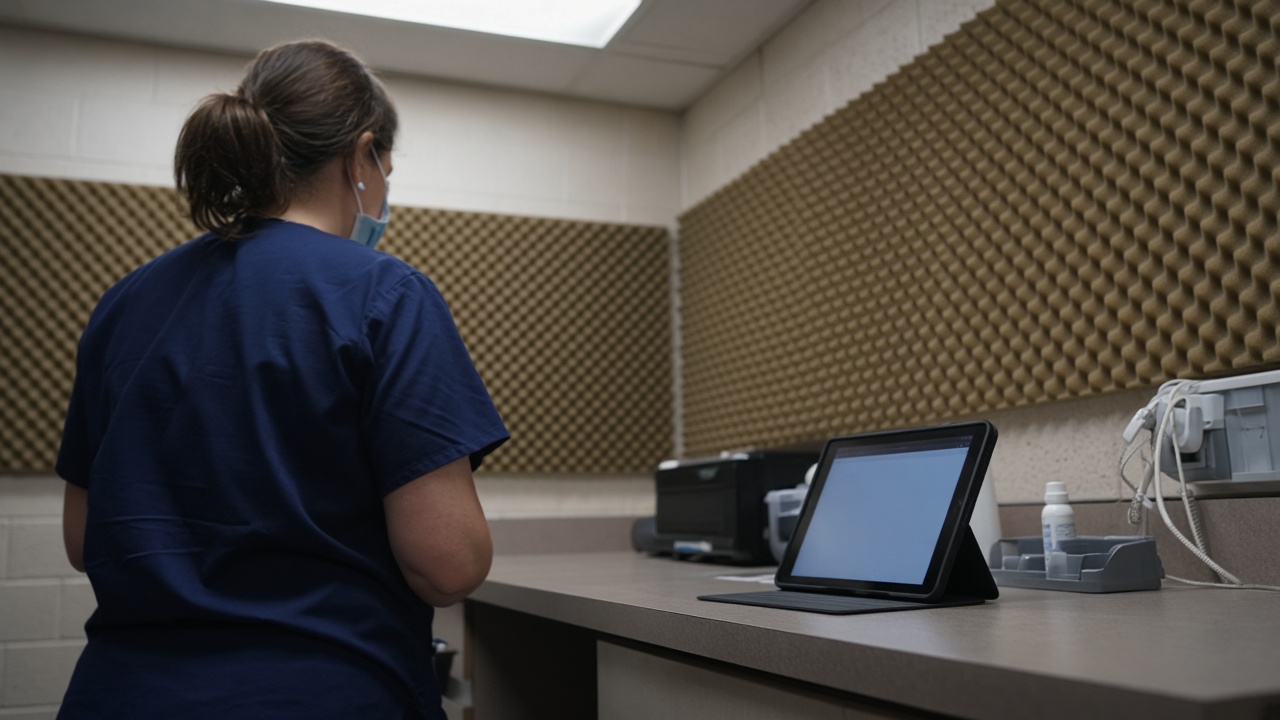
Patients who select Hokkien on a kiosk tablet wear a disposable headset at the triage desk. Audio streams to an on-premise GPU box running a fine-tuned Whisper large checkpoint; transcripts appear on the nurse’s screen within four seconds on average during morning tests last week. Nurses still confirm allergies and medication lists verbally—automation stops at free-text chief complaint fields.
Registration clerks said average intake time dropped eleven minutes on pilot mornings when family members did not need to repeat answers in Mandarin, a gain hospital leadership will weigh against GPU leasing costs in the March review.
The hospital restricted the pilot to weekday mornings when dialect volume is highest and Mandarin–English bilingual staff overlap. Night shifts keep the legacy Mandarin-only workflow so trauma teams are not debugging software during surge hours.
IT staff documented GPU utilization averaging sixty-two percent during pilot mornings, headroom they said justifies a single box for now but not a third radiology-sharing node without the second ER GPU purchase.
Accuracy and privacy
Biomedical informatics staff reported a 92 percent word-match rate against nurse re-listens on a 120-clip validation set drawn from de-identified October tapes. Errors clustered on medical homophones and Taiwanese loanwords for pain descriptors. Audio never leaves the hospital VLAN; the ministry’s telemedicine cloud is not in the path.
Consent forms added a checkbox explaining that dialect audio is processed on-site and deleted after chart sign-off unless the patient opts into a research subset for model tuning.
Hospital privacy officers ran a tabletop exercise last week simulating a misrouted VLAN cable; they said the drill showed transcripts never left the ER subnet, a result they will append to the March expansion packet for regulators.
Why Hokkien first
Far Eastern sits in a catchment where Hokkien dominates among older adults who arrive with family translators unavailable at 2 a.m. Typing delays at registration ripple into bed assignment metrics the hospital publishes to insurers. Mandarin speech tools already existed; the gap was dialect coverage without sending audio to consumer phone keyboards.
Other Taiwan Medical Association members asked for the validation memo, but Far Eastern cautioned that its GPU footprint and nurse training hours are not portable to smaller regional hospitals without budget lines.
Social workers on the ER floor said dialect transcription reduced repeat questioning for elderly patients who already answered once in Hokkien but were asked again in Mandarin by rotating staff. They logged fewer walkouts during the pilot mornings, though sample size remains small.
Expansion criteria
Informatics leads set a March review gate: if transcription edits fall below fifteen percent of clips and no privacy incident occurs, the hospital will add Hakka and indigenous Amis phrase lists for registration. ER physicians stressed that Whisper output is a draft—clinicians remain liable for final documentation.
Biomedical staff tested a fallback mode that routes unclear clips to human scribes behind the triage desk, preserving throughput when GPU utilization spikes during mass-casualty drills. Far Eastern said that mode stays disabled unless emergency management declares a level-two surge.
Far Eastern’s procurement office is negotiating a second GPU node so the ER lane does not compete with radiology batch jobs at noon. Nursing directors said they will track time-to-triage metrics weekly and publish anonymized edit rates to the ministry if the pilot expands beyond the single campus.
Hospital lawyers reviewed vendor contracts to ensure Whisper weights stay on hospital-owned storage, not vendor cloud mirrors. That review added two weeks to procurement but satisfied patient advocates who opposed any dialect audio leaving New Taipei.
Training modules for triage nurses include a fifteen-minute drill on when to discard transcripts that mismatch vitals or obvious Mandarin clarifications from family members. Informatics staff said the discard rate last week stayed under eight percent, well below the fifteen percent expansion threshold.