A magnitude 4.7 earthquake rooted about 50 kilometers beneath northeastern Chiba Prefecture shook wide stretches of the Kanto plain on Tuesday afternoon, sending intensity-3 shaking through Sanmu district towns and lighter tremors across Tokyo’s 23 wards and Narita airport approaches. The Japan Meteorological Agency said the 2:40 p.m. event carried no tsunami risk, but it reminded residents that deep quakes can still rattle high-rise offices and rail nodes without surface rupture.
Where shaking registered
JMA’s automated estimate placed the hypocenter under the Sanmu region northeast of Chiba city, at a depth near 50 kilometers. The strongest ground motion, lower-5 on the Japanese shindo scale in some reporting chains and intensity 3 in the agency’s English feed, hit Tōgane, Asahi, Sōsa and neighboring municipalities along the Pacific coast corridor that feeds Route 126 toward Narita.
Intensity 2 reached portions of Chiba city, Narita, Ichihara and Kashima in Ibaraki, while Tokyo’s central wards recorded intensity 1 across all municipalities from Chiyoda to Edogawa. Yokohama and parts of Saitama also reported weak shaking, meaning roughly 19.5 million people lived in areas that felt the tremor according to demographic overlays published by local media.
Immediate impacts
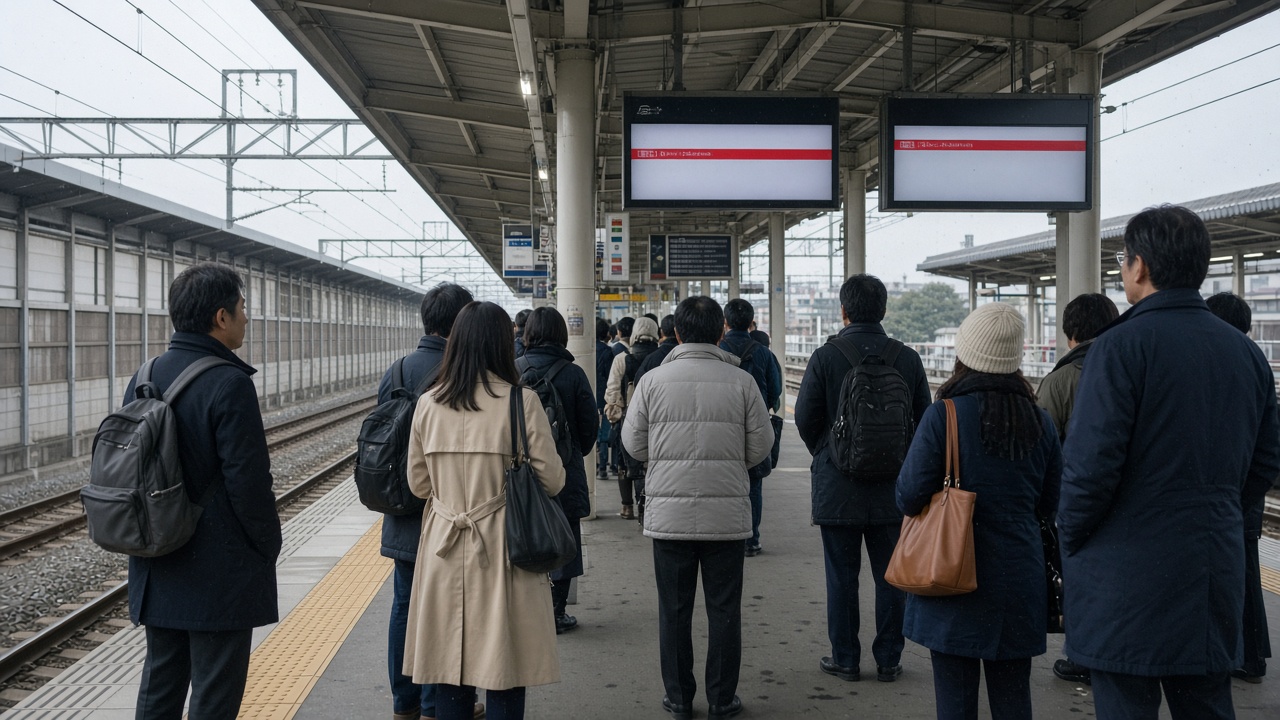
Chiba prefectural officials said they had no confirmed injuries or structural collapses within the first hour, though fire departments dispatched inspection teams to older wooden housing clusters in Sōsa. East Japan Railway Company reported brief speed restrictions on Uchibo and Sōbu lines while track crews walked critical bridges; Narita International Airport’s operator said runways stayed open and no flights diverted.
Industrial users along the Keiyo corridor paused liquefied natural gas unloading as a precaution, a routine step when deep quakes strike near coastal energy terminals. Schools in Tōgane dismissed after-school clubs early so buses could run before dusk inspection rounds, a measure parents had requested after stronger Chiba events in recent years.
Context for disaster planners
Tuesday’s jolt arrived two days after Prime Minister Sanae Takaichi inaugurated a standalone National Disaster Management Agency tasked with coordinating ministries during complex disasters. Disaster Reconstruction Minister Goshi Hosono, touring Kumamoto prefecture the same day, told reporters that regional “disaster bureaus” would eventually cover all prefectures so command posts need not rely solely on Tokyo.
Seismologists note that deep intraplate earthquakes under the Kanto fragment can produce widely felt motion without the short warning times associated with offshore subduction ruptures. Chiba’s disaster office urged households to secure furniture before the year-end typhoon season and to register mobile phones for JMA’s Earthquake Early Warning tests scheduled later this month.
For travelers, the timing underscored Narita’s sensitivity: afternoon quakes can coincide with peak international departures, when security lines already stretch through Terminal 2. Airport officials said they would review overnight whether to stage additional engineers near elevated rail links, but Tuesday’s operations ended on schedule with only minor train delays reported after 3 p.m.