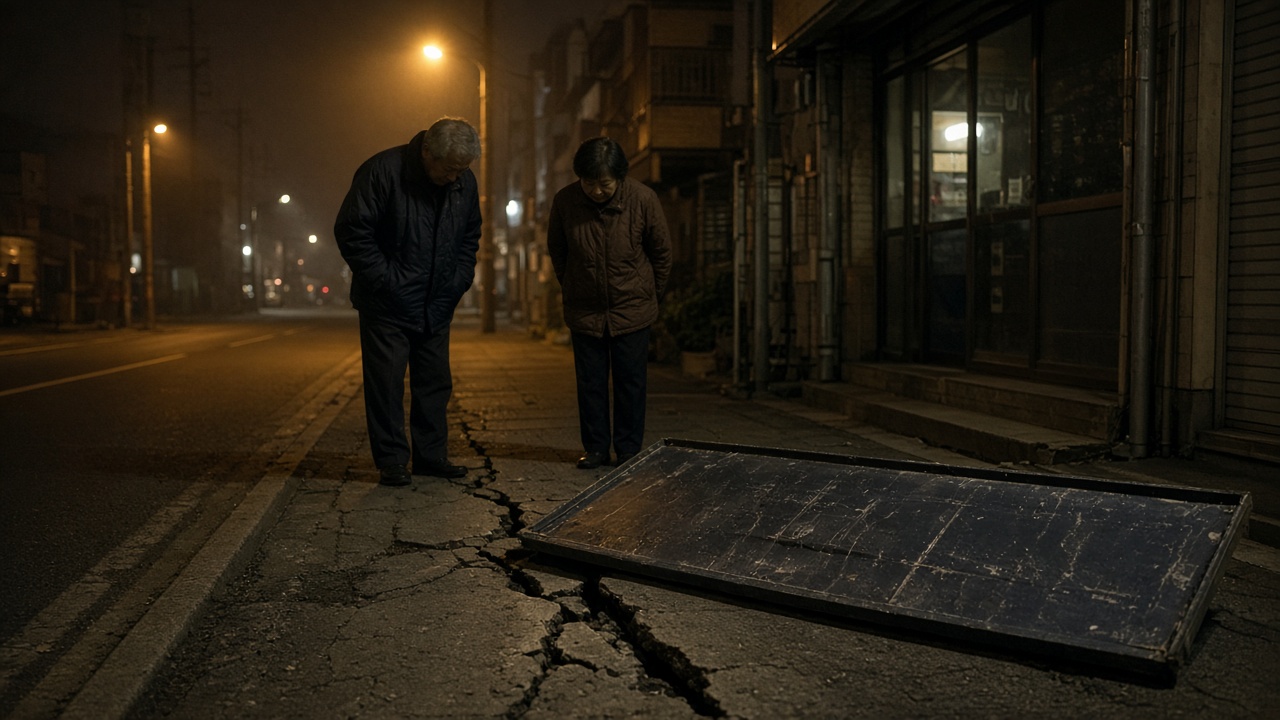
A magnitude 5.7 earthquake centred in western Shizuoka Prefecture rattled central Japan at 1:04 a.m. on Sunday, injuring at least three people in Shizuoka communities and halting a Sunrise Seto–Sunrise Izumo sleeper train between Takatsuka and Maisaka stations, the Japan Meteorological Agency and local fire agencies said.
The quake registered upper 5 on Japan's seven-step shaking scale in Chita City, Aichi Prefecture—the first jolt that strong in the prefecture since March 1997—while lower-5 intensity was recorded in parts of Shizuoka, Gifu and Nagano. The agency placed the hypocentre about 41 kilometres deep inside the Philippine Sea plate and said there was no tsunami risk.
Injuries and local damage reports
Fire departments in Shizuoka reported a woman in her 30s dislocated a shoulder in Kakegawa, a 52-year-old woman in Iwata was taken to hospital after hitting her head, and a 92-year-old woman in Mori fell from bed, according to NTV and municipal bulletins.
In neighbouring Aichi, officials logged additional casualties including a woman in her 50s with a fractured ankle in Tokoname and head injuries to residents in Toyota after falls during the shaking. Higashiura Town received reports of burst water mains and manhole overflows that briefly cut supplies in some blocks.
JMA guidance on aftershocks
Agency official Ebita Ayataka told a midnight press briefing that areas shaken hardest should watch for rockfalls and landslides, especially if rain follows. He said similar-sized quakes occur within a week in roughly one or two out of ten cases and asked residents to prepare for aftershocks up to upper 5 for several days.
Because the epicentre lies inside the Nankai Trough's projected source region, reporters pressed officials on whether the tremor foreshadowed the long-feared megaquake. Ebita said the event did not by itself signal a sharp change in plate coupling along the trough, though monitors would continue watching crustal strain.
Power, transport and Hamaoka checks
Chubu Electric Power reported no abnormalities at the offline Hamaoka nuclear station on Shizuoka's coast, where live cameras showed steady night operations throughout the shaking. Central Nippon Expressway Company said eastbound and westbound lanes on the Tomei and Shin-Tomei expressways remained open after inspections.
JR Central said the Sunrise sleeper duo made an emergency stop on the Tokaido Main Line; crews were checking track geometry before clearing overnight hotel cars to resume. Morning Shinkansen services reported only minor delays while workers walked lines near Gotemba and Kannami where lower-5 shindo was felt.
What residents should expect on Monday
Municipal offices in Mori and Fukuroi opened phone lines for furniture tip-over damage and said disaster waste centres would accept broken ceramics during daylight hours. Schools in western Shizuoka planned Monday walk-throughs of gymnasiums and science labs before classes, following education ministry protocols after strong inland quakes.
Tokyo's cabinet secretariat logged the event in its integrated disaster portal but did not trigger the satellite cabinet office. For now, the response stays with prefectural governors who will decide whether to open communal shelters if aftershocks keep families sleeping in cars for a second night.