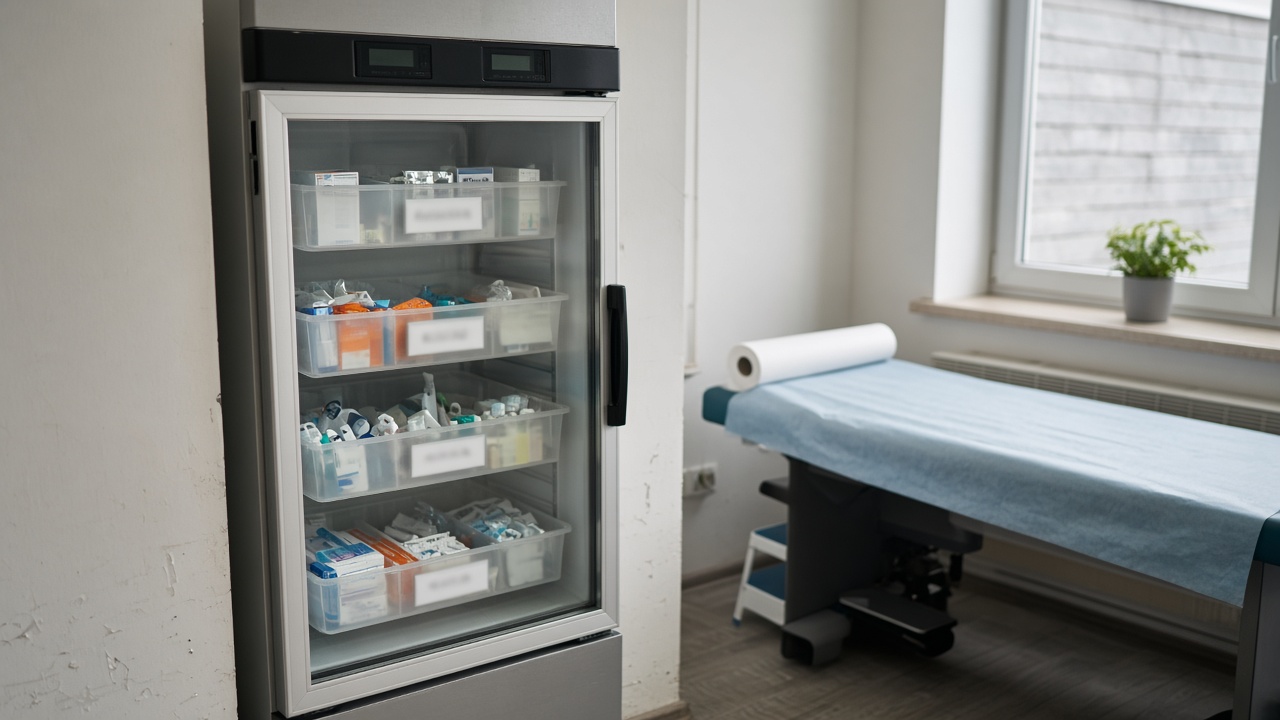
The Food and Drug Administration approved updated labeling and lot-release specifications for nirsevimab, the long-acting antibody used to protect infants from respiratory syncytial virus, clearing the way for hospital pharmacies and pediatric networks to place winter-season bulk orders without ad hoc compassionate-use packets that delayed last year’s rollout.
What the clearance changes
The Monday action updates stability data for revised cold-chain intervals and allows a single intramuscular dose for eligible newborns and toddlers entering their first RSV season, matching American Academy of Pediatrics committee recommendations issued after last winter’s hospitalization spike. FDA reviewers said immunogenicity bridging studies supported the label tweak; they did not authorize home self-administration—doses remain clinic- or hospital-given.
Ordering and supply
Manufacturer Sanofi and partner AstraZeneca told wholesalers that allocation requests open Wednesday with phased shipments to children’s hospitals first, then community pediatric practices that participated in prior season programs. CDC’s Vaccines for Children contract officers expect formulary updates within days so state immunization programs can encumber funds before October clinic backlogs.
Who is covered—and who is not
Labeling targets infants born during or entering their first RSV season and certain high-risk second-season toddlers per clinician judgment. Premature infants and those with chronic lung disease remain priority groups in AAP scheduling guidance. The approval does not replace maternal RSV vaccines administered during pregnancy; obstetric and pediatric timelines should be coordinated to avoid redundant dosing—an error FDA’s medication guide explicitly warns against.
Evidence limits
Trials demonstrated relative reductions in medically attended RSV lower respiratory disease; absolute risk drops depend on community transmission intensity, which varies year to year. Real-world effectiveness last season lagged trial endpoints in some counties with low uptake, underscoring that product availability alone does not shrink ICU census.
What readers should not do
Parents should not seek off-label adult doses or combine antibody prophylaxis with unapproved antiviral cocktails marketed on social media. Clinicians should verify lot numbers against the FDA release list before administration—hospitals that stored pre-update vials must follow disposition memos accompanying the clearance.
Payment and access
CMS affirmed that approved nirsevimab administration qualifies for standard vaccine administration fees in Medicaid and CHIP when state plans adopt the CDC schedule. Private insurers largely mirrored last season’s coverage, but employer plans with September renewals should confirm pharmacy benefit manager formularies—some still list the product under medical rather than pharmacy riders, creating prior-authorization friction pediatric offices flagged in comment letters.
Public health read-through
The regulatory fact is procedural but time-sensitive: updated labeling and lot release before ordering season, with cold-chain rules hospitals can plan around. RSV hospitalizations are common enough that even modest uptake shifts ICU load; the FDA action removes one bureaucratic bottleneck—distribution and parental consent conversations remain the harder work before frost and indoor crowding return.