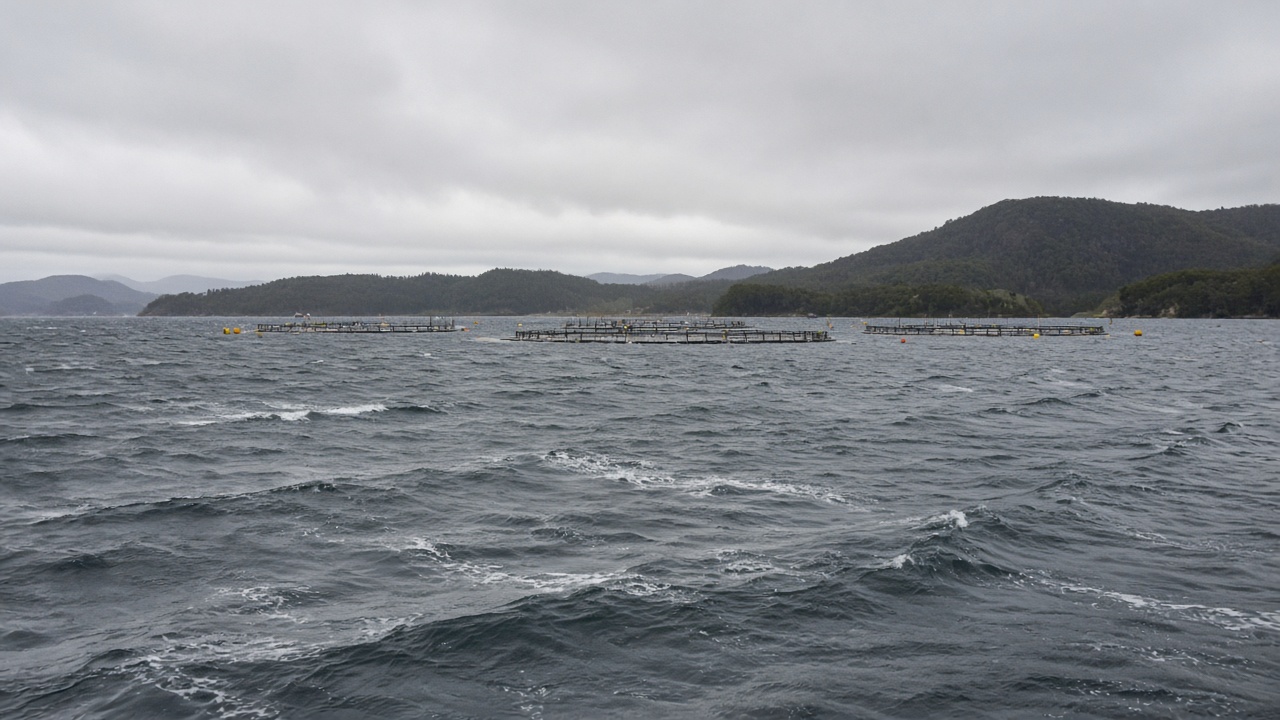
Tasmanian Premier Jeremy Rockliff tabled legislation capping future salmon farm leases in Macquarie Harbour and tying renewals to biomass limits, moving ahead of a federal environmental review that could reshape how lease tenure interacts with Commonwealth threatened-species protections for the Maugean skate.
What is on the notice paper
The bill freezes net pen expansions beyond current footprints until independent modelling on dissolved oxygen and skate habitat is incorporated into lease conditions. Government MPs from Hobart’s northern suburbs backed the cap as a signal to Canberra that Tasmania will not wait for a federal decision before constraining industry growth; two backbenchers from the West Coast warned that premature caps could trigger compensation claims from producers already investing in land-based fallback systems.
Opposition Labor said the caps are overdue but accused the government of drafting loopholes that let “trial” pens outside the harbour evade the freeze. The Greens crossbench demanded binding biomass numbers in statute, not ministerial discretion, before they will guarantee passage through the Legislative Council.
Who has the votes
Rockliff’s minority government needs at least one crossbencher in the upper house, where independents have extracted environmental concessions on forestry and mining bills in prior sessions. Industry lobbyists spent the weekend briefing councillors on jobs in Strahan and processing plants near Huonville, while conservation groups circulated federal review timelines showing a decision window overlapping state lease renewals due in 2027.
Federal Environment Minister staff told Tasmanian counterparts that Commonwealth assessors will not be rushed, but acknowledged that state lease law sends signals to investors watching both jurisdictions.
What happens in committee
A joint committee hearing is set for late September with EPA Tasmania, salmon producers, and skate researchers. Expect fights over whether oxygen injection counts as mitigation or masks carrying capacity, and whether lease caps should apply retroactively to pending amendments.
If the bill stalls, Rockliff could call an early sitting, but parliamentary clerks note only three weeks remain before budget estimates dominate the calendar—compressing time for amendments.
What readers should watch
Lease caps are not the same as exit timelines: producers may keep farming within smaller envelopes for years. The federal review could still impose additional conditions on export approvals. Tasmanian voters will hear competing claims about jobs versus skate survival; the notice paper test is whether biomass limits are written in law or left to press releases.
Calendar pressure
Rockliff scheduled a second reading debate before the spring recess, betting that salmon companies will not risk a public campaign against skate protections while federal assessors are still taking submissions. Union officials in processing towns said they want transition funds if caps bite, a demand Treasury has not priced in the current fiscal update.
Environmental lawyers noted that state lease caps cannot override Commonwealth export or threatened-species decisions, but they can starve expansions by denying tenure. That legal split is why both governments are talking past each other: Canberra sees species law; Hobart sees jobs on the wharf.
Observers expect the Legislative Council to amend the bill with reporting requirements rather than kill it outright—typical for resource disputes in Tasmania. Whether those reports include public biomass numbers, not just ministerial summaries, will determine if the caps mean anything when the next storm season hits the harbour.