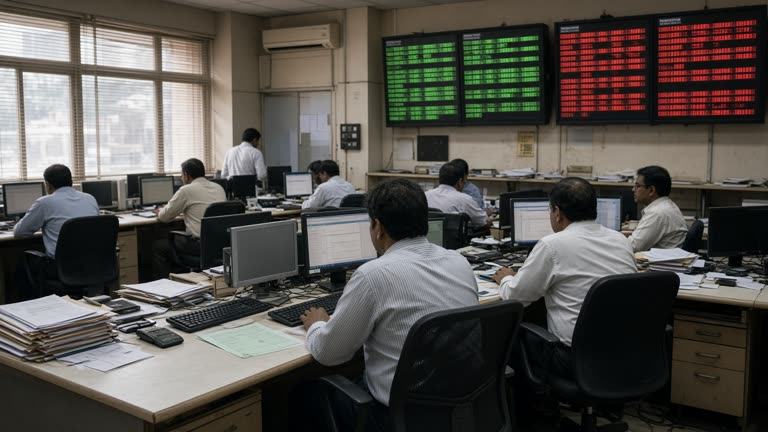
Nikkei 225 futures traded in a tight band above the cash market's 18 September close of 65,018.95 during the three-day Silver Week interruption to Tokyo Stock Exchange cash sessions, letting overseas desks adjust exposure to the Bank of Japan's 1.25 per cent policy stance without the liquidity wall that usually absorbs domestic fund flows.
Who led and by how much
Osaka Exchange night-session data showed modest net buying from macro funds hedging US tech earnings due later in the week, while domestic proprietary desks throttled activity because holiday staffing left fewer risk limits online. Volume ran below the September average by a double-digit percentage—a typical Silver Week pattern that magnifies each tick move on screens traders stare at from home offices.
Topix-linked contracts moved in sympathy but with less open interest, signalling that the narrative is still large-cap exporters and financials rather than a broad beta chase. Yen crosses stayed volatile; futures held up despite a briefly stronger yen because investors treated the BOJ move as already priced at the cash close.
The mechanism
Cash-market closure severs the arbitrage loop that normally pins futures to spot via index arbitrageurs; during holidays, basis can wander until the Thursday reopen. The 65,018.95 print matters because it was set after the BOJ announcement, embedding a hawkish read that futures traders are unwilling to fade without new information.
Overseas holders of Japanese equities often use Nikkei futures to hedge currency-plus-equity risk in one instrument; Silver Week forces them to trade on Osaka while unable to adjust underlying ETFs listed in Tokyo. That structural thinness can exaggerate moves that reverse on the first cash bell—exactly the setup Nina Okonkwo watches for falsification signals.
What the street already had
Consensus entering September already assumed a BOJ hike; the surprise at the meeting was guidance tone, not the 1.25 per cent level itself. Futures holding near post-decision highs imply markets accept that financials can benefit from steeper yield curves even if exporters face yen headwinds—a barbell that matches sector weights in the Nikkei.
Options on futures show only modest implied volatility into the reopen, suggesting desks do not expect a gap shock unless US data or typhoon damage revisions hit wires before Thursday. Retail participation is minimal in night session; the positioning is professional.
What would falsify it by Thursday
A sharp yen spike on intervention rumours could compress exporter multiples and drag futures below the 65,000 anchor without any company news. Conversely, strong US semiconductor earnings could lift Advantest-weighted indices overnight, stretching basis further from cash.
Any TEPCO-led growth scare tied to prolonged Chiba outages could hit domestic demand names on reopen, a macro cross-current futures may front-run if damage estimates worsen on Tuesday.
Macro cross-currents
Global bond yields and BOJ 1.25 per cent interact through carry trades; holiday sessions sometimes see carry unwinds when liquidity is poor, independent of Japan-specific fundamentals. China demand data dropping during the same window would hit materials names disproportionately in the index basket.
Bank earnings previews circulate in research notes even when cash is closed; traders use futures to express views on net interest margins without waiting for TSE hours.
Thursday reopen risk
Index arbitrageurs returning Thursday morning usually lean basis toward fair value within the first hour unless overseas futures gap sharply overnight Wednesday. If night-session highs hold, cash may open firm; if US risk-off hits Wednesday, a lower futures print could signal a gap down brokers warn retail clients about in app notifications.
For now the story is simple: post-BOJ gains are parked in futures while Japan enjoys Silver Week—until cash proves whether 65,018.95 was a ceiling or a floor.
Order book versus spot
Block brokers report light corporate buyback activity scheduled for the reopen week; absence of issuer support can leave futures more sensitive to foreign flow. If basis widens further without news, expect mean reversion trades to accelerate once TSE matching engines restart on Thursday morning.