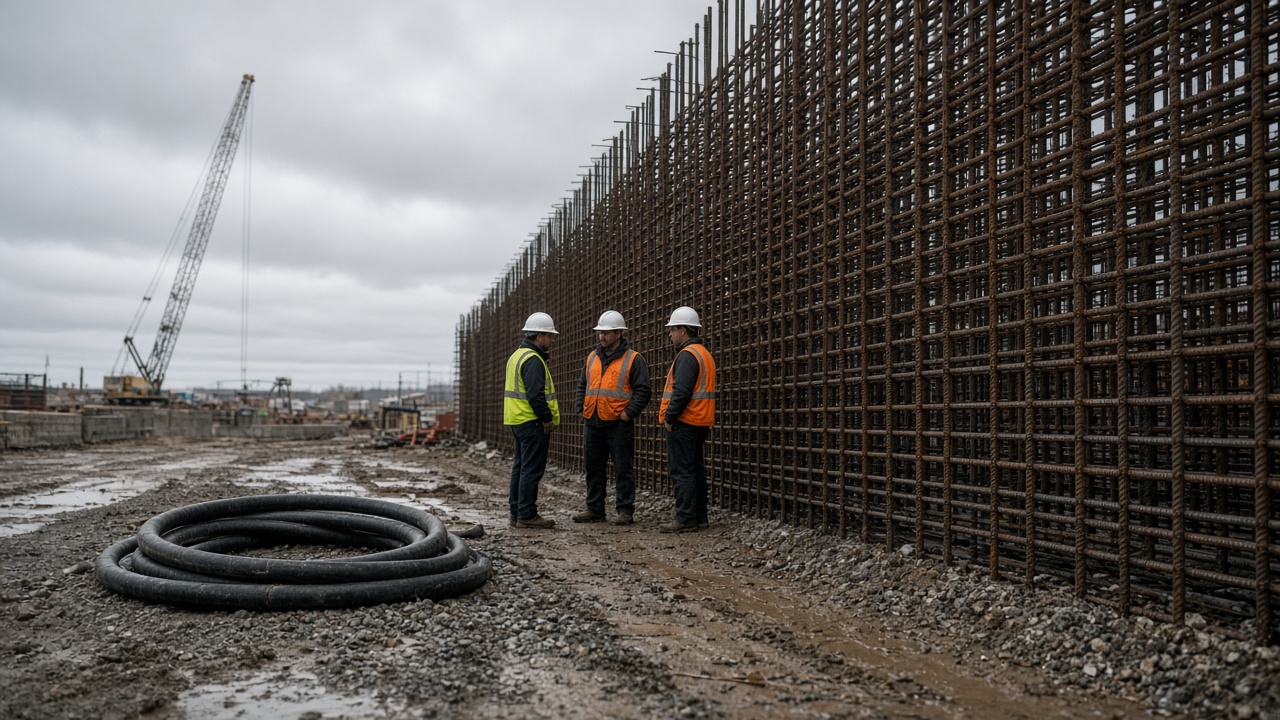
Ironworkers Local 290 told members Friday they will vote next week on whether to authorize a walkout at Intel’s New Albany semiconductor campus after project managers delayed two major concrete pours that were supposed to cap the first fab shell’s ground floor. The slips push crane and rebar work into late September, a window when Ohio crews usually shift to winter protection plans and when Intel’s foundry partners are watching whether the $20 billion site stays on the public timeline Intel reiterated after its August manufacturing update.
What slipped on site
General contractor Turner Construction notified trade stewards that a pour for the west utility spine was halted when soil compaction tests along a stormwater trench failed spec, according to a steward bulletin reviewed by InfoHandle. A second pour for an equipment pad near the future cleanroom spine was rescheduled after a concrete supplier flagged aggregate moisture readings that would have slowed cure times in cool overnight temperatures. Intel declined to comment on daily schedules but said in a statement that “construction remains active across multiple structures” and that safety reviews sometimes pause work.
For ironworkers, the delay is not abstract: each postponed deck pour leaves tower cranes holding rebar cages aloft longer, adding wind-load restrictions and overtime callbacks. Local 290 business manager Denise Hart said members logged 11 unplanned stand-down hours last week across two shifts, hours that do not count toward production bonuses tied to pour milestones in the project labor agreement.
Why the vote matters now
The authorization vote does not automatically trigger a strike; it gives negotiators leverage if Intel and Turner do not restore pour windows or clarify which trades own rework along the failed trench line. Still, the timing is sensitive. Intel is racing to show external foundry customers that Ohio capacity will exist before rival fabs in Arizona and Texas add lines, and state officials have tied job-training grants to headcount targets on site.
JobsOhio records show more than 7,000 workers have cycled through the Licking County project since earthmoving began, with ironworkers among the highest-paid trades. A prolonged dispute could ripple into electrician and pipefitter schedules because cleanroom steel must be set before overhead MEP rough-in. Turner has brought in a second testing firm for compaction, but Hart said members want written assurances that weather delays will not be blamed on trades when suppliers or design changes drive slips.
Intel’s construction story
Intel’s Ohio announcement promised two leading-edge fabs on a 1,000-acre campus with water recycling and on-site training centers. Since then, Intel has trimmed some near-term spending while emphasizing its “shell-first” strategy: erect weather-tight structures even as tool install dates move. Construction sources said the current focus is the first fab’s central utility building and spine corridors that will carry ultrapure water and chemical lines—work that tolerates fewer concrete defects than office slabs.
Union officials note Intel used similar pour-gated milestones at its Oregon D1X expansions, where disputes were resolved with weekend pour windows and bonus language. Ohio’s prevailing-wage rules add reporting overhead; stewards said missing a pour slot can push crews into double-time without matching productivity credits.
State and community stakes
Governor Mike DeWine’s office has treated the fab as a Midwest anchor for suppliers; delayed pours do not change tax incentives yet, but local villages are watching traffic and housing plans tied to peak construction employment. New Albany officials said road closures for crane picks were already scheduled around high school football Fridays; further slips may force night pours that residents have complained about in public meetings.
Community college partners running cleanroom bootcamps asked Intel for updated completion hints so they do not graduate pipefitters into a idle site. Intel’s public timeline still lists first production in the back half of the decade, language that gives construction teams room—but foundry customers want steel in the air as proof.
What Intel will not say yet
Intel has not published a revised Gantt chart for Ohio since restructuring its foundry division. Analysts who tour megaprojects said the visible rebar on the first fab is progress, but utility trenches are where many greenfield fabs lose quarters to rework. Intel’s statement Friday emphasized collaboration with trades and did not mention the vote.
Turner referred questions to Intel. Subcontractors pouring nearby office shells for Intel suppliers said their schedules were unaffected, underscoring how much of the dispute is localized to the fab footprint rather than the whole park.
Next steps for trades
Ballots open Tuesday at the local hall in Columbus; results could arrive Wednesday night. Hart said leaders want a settlement before October cold snaps make concrete cures harder and before crane mats soften in rain. Even if members authorize action, negotiators could still trade pour sequencing guarantees for standby pay language.
For readers tracking U.S. fab capacity, the story is less about DRAM prices this month and more about whether the physical plant keeps pace with Intel’s foundry marketing. A walkout would be loud; the quieter signal is already here—two pours that did not happen on time, and ironworkers asking who owns the delay.