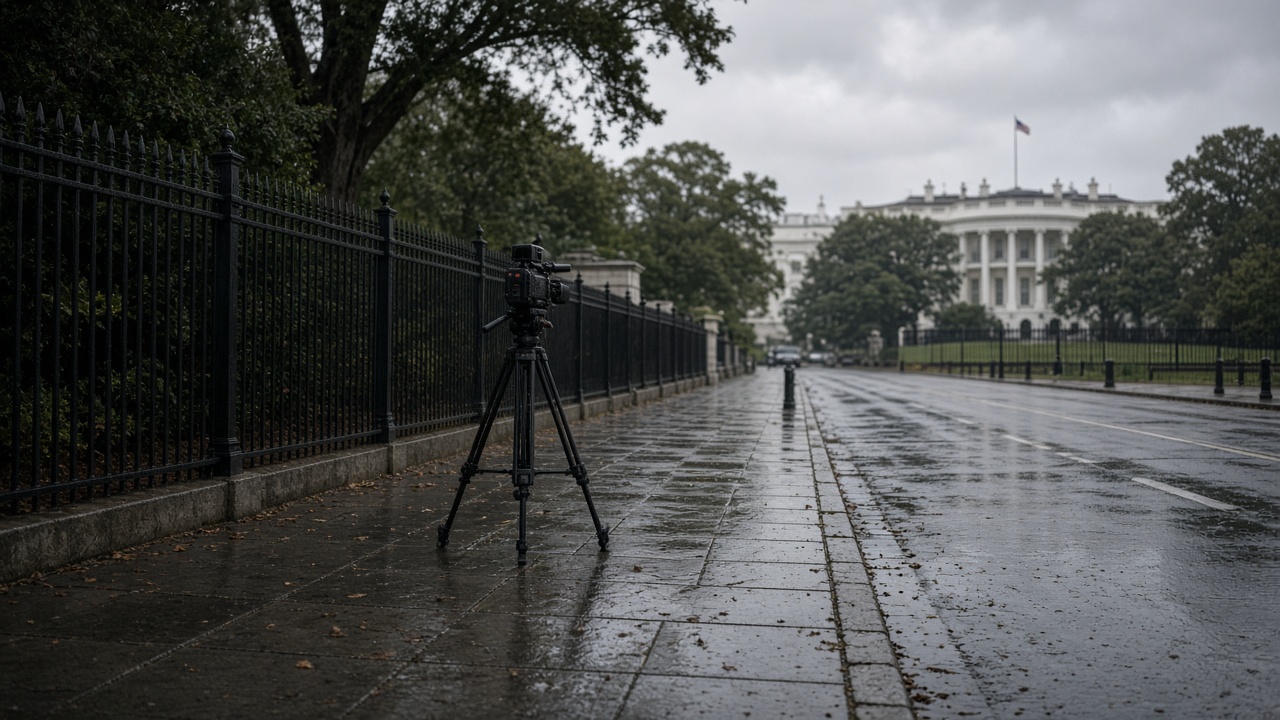
President Donald Trump is leaning on national-security language to defend two fights arriving on the same calendar: a White House ban on CNN, MS NOW, and Politico that faces a federal hearing Wednesday, and a planned 250-foot triumphal arch near Washington that he now describes as a “military complex” with snipers, drones, and ammunition storage. Four legal scholars told Reuters on Tuesday that the press restrictions likely violate viewpoint-discrimination rules that courts have applied when the government opens official spaces to journalists.
Press access and the Wednesday hearing
U.S. District Judge Timothy Kelly scheduled a 3:30 p.m. ET hearing on Sept. 23 in Washington after the three outlets sued Friday, seeking a preliminary injunction to restore credentials revoked when security deactivated badges on Sept. 19. Reporters Betsy Klein of CNN, Akayla Gardner of MS NOW, and Cheyenne Haslett of Politico were turned away at the White House gate while attempting live shots, according to their employers and the White House Correspondents’ Association.
The lawsuit argues the ban is retaliation for protected reporting and denies due process. Trump, posting on Truth Social after the suit was filed, called the outlets a “threat to our National Security” without citing classified material. Justice Department attorneys must file a response Tuesday, USA Today reported, setting up a fast collision between First Amendment precedent and a president who has repeatedly used security claims to justify tariffs, National Guard deployments to Democratic cities, and cancellations of offshore wind leases.
Security as a multipurpose shield
Reuters documented five national-security invocations in the past week alone, including the ballroom-arch project that originally sold as a ceremonial legacy structure. Trump told supporters the arch would double as hardened infrastructure, a framing that could matter if contractors need expedited permits or if critics challenge spending authority. Scholars said courts sometimes defer to the executive on genuine military secrets but scrutinize claims tied to public relations disputes.
White House officials have not published a written threat assessment linking specific stories to credential revocations. Previous litigation during Trump’s first term, including Kelly’s order reinstating a CNN reporter, turned on whether the administration applied viewpoint-neutral rules. Legal experts interviewed by Reuters said Trump’s own statements about “fake news” undermine a neutral rationale.
UN week backdrop
The courtroom fight unfolds as Trump prepares to address the United Nations General Assembly on Tuesday with Iran war politics dominating allied agendas. Diplomats said allied leaders worry that domestic confrontations with U.S. media could distract from Gulf shipping talks, yet the press ban is already shaping how foreign ministries brief reporters traveling with their delegations—several European communications aides said they are advising journalists to file from Lafayette Square rather than the West Wing driveway.
Congressional Democrats plan oversight letters asking the Secret Service to document how credential suspensions were recorded, according to staffers who spoke on condition they not be named because hearings are not yet scheduled. Republican leadership has largely deferred to the White House, though a handful of senators from press-heavy states have urged a reversal without joining the lawsuit.
What comes next
If Kelly grants even a temporary injunction, reporters could return to the campus while the case proceeds; if he denies relief, the outlets will likely seek an expedited appeal at the D.C. Circuit. Either outcome will be cited in the dozens of other access disputes percolating in lower courts, from Pentagon embed rules to ICE detention transparency.
For politics desks, the through-line is procedural: a president testing how far national-security rhetoric can stretch when the disputed asset is a press badge, not a border wall. Wednesday’s hearing will be the first public scorecard.