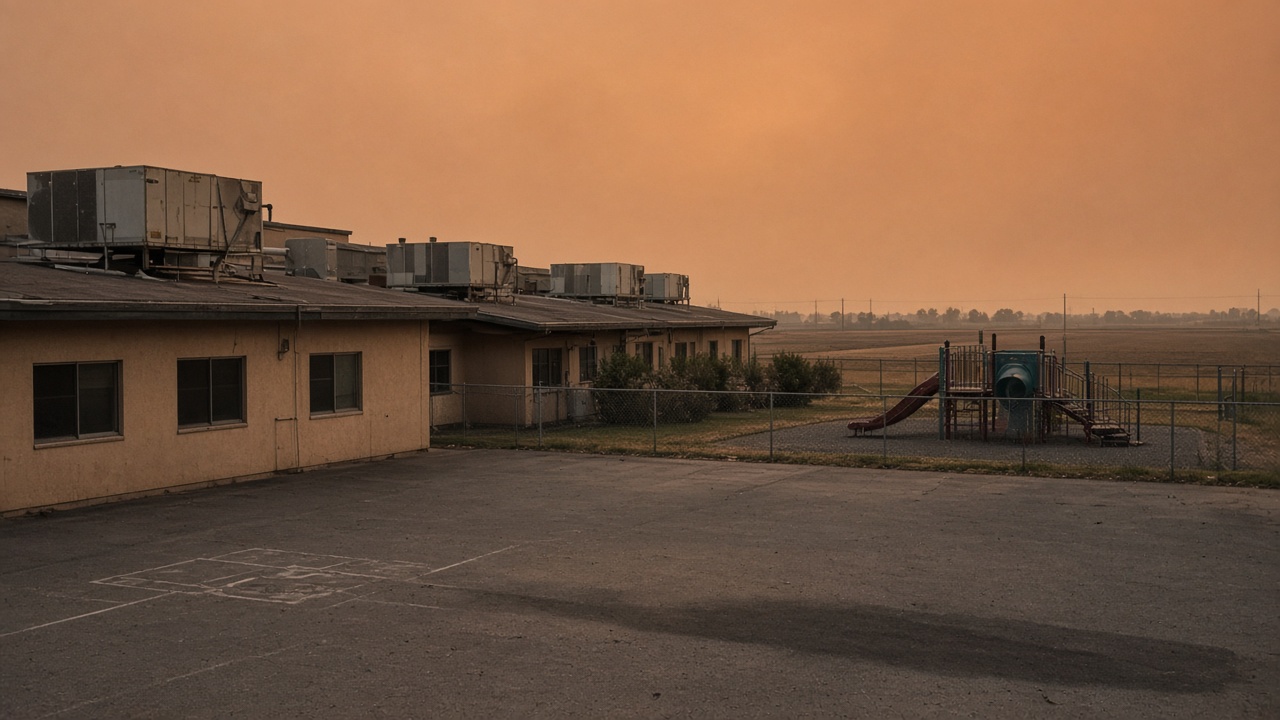
Stanford University engineers released field-calibrated decay curves for wildfire smoke particulate inside Central Valley classrooms after September plumes, giving district operations staff numeric targets for when to reopen schools if outdoor Air Quality Index falls faster than indoor PM2.5 readings—a gap Fresno and Bakersfield administrators said previously forced guesswork during multi-day closures.
What was measured
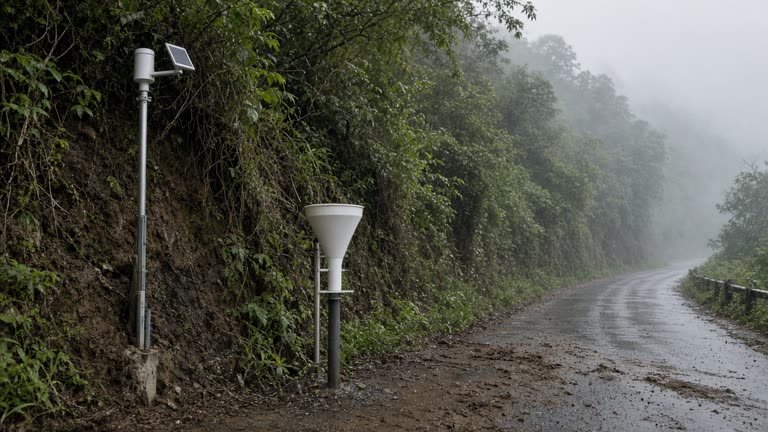
Teams paired rooftop HVAC intakes with low-cost indoor sensors in twelve elementary and high schools during two smoke events. They logged PM2.5 half-lives after outdoor AQI dropped below 100, finding indoor concentrations lagged by four to eleven hours depending on filter MERV ratings and locker-room exhaust leaks. Sample size covers roughly 840 classroom-hours—not a statewide census but enough to differentiate MERV-13 retrofits from legacy MERV-8 units still common in 1990s campuses.
Effect size and limits
Decay rates improved roughly thirty-five percent where districts installed portable HEPA scrubbers during nights, but gyms without dedicated filtration remained hotspots above EPA 24-hour guidance even when classrooms cleared. Authors do not claim the curves predict health outcomes for asthmatic children; they model particulate physics, not pediatric clinic admissions.
Researchers excluded agricultural dust days to isolate wildfire signatures—a limitation superintendents noted because fall tilling sometimes coincides with smoke, confusing single-sensor dashboards.
What authors do not claim
The bulletin does not recommend a universal reopening threshold or replace California Office of Emergency Services directives. It does not assert climate attribution for September fires. Peer review is pending; operational PDFs were shared with county offices of education under embargo until Friday.
What happens next
Stanford will open-source spreadsheet tools merging PurpleAir feeds with decay constants by filter class. CARB observers said they may cite the curves in updated school smoke guidance if independent replication holds through October fires. Districts without MERV-13 budgets still face equity questions the paper flags but does not fund.
Emily Park’s read: useful instrumentation with honest error bars—not a lifestyle headline about “AI saving recess.” Planners get numbers; parents still deserve nurse-office policies when indoor lag exceeds outdoor headlines.
Replication plans
Teams will deploy the same sensor packs in Stockton and Modesto during the next major plume, testing whether decay constants hold across different building vintages. Until then, superintendents should treat the curves as provisional scheduling aids, not pediatric clearance certificates.
Comparison with outdoor-only policies
Many districts still rely on outdoor AQI apps alone; Stanford’s lag data show that policy keeps gyms closed too long while classrooms stay open too early—or the reverse when exhaust leaks dominate. Nurses asked for separate thresholds for athletes; the study did not model exertion, another limit authors highlight in appendices.
If CARB adopts the curves, expect filter-upgrade bonds on 2026 ballots in districts where MERV-8 units dominate. Science here informs budget fights, not just recess schedules.